Where We Are

Where We Are

Welcome to the Neighborhood(s)

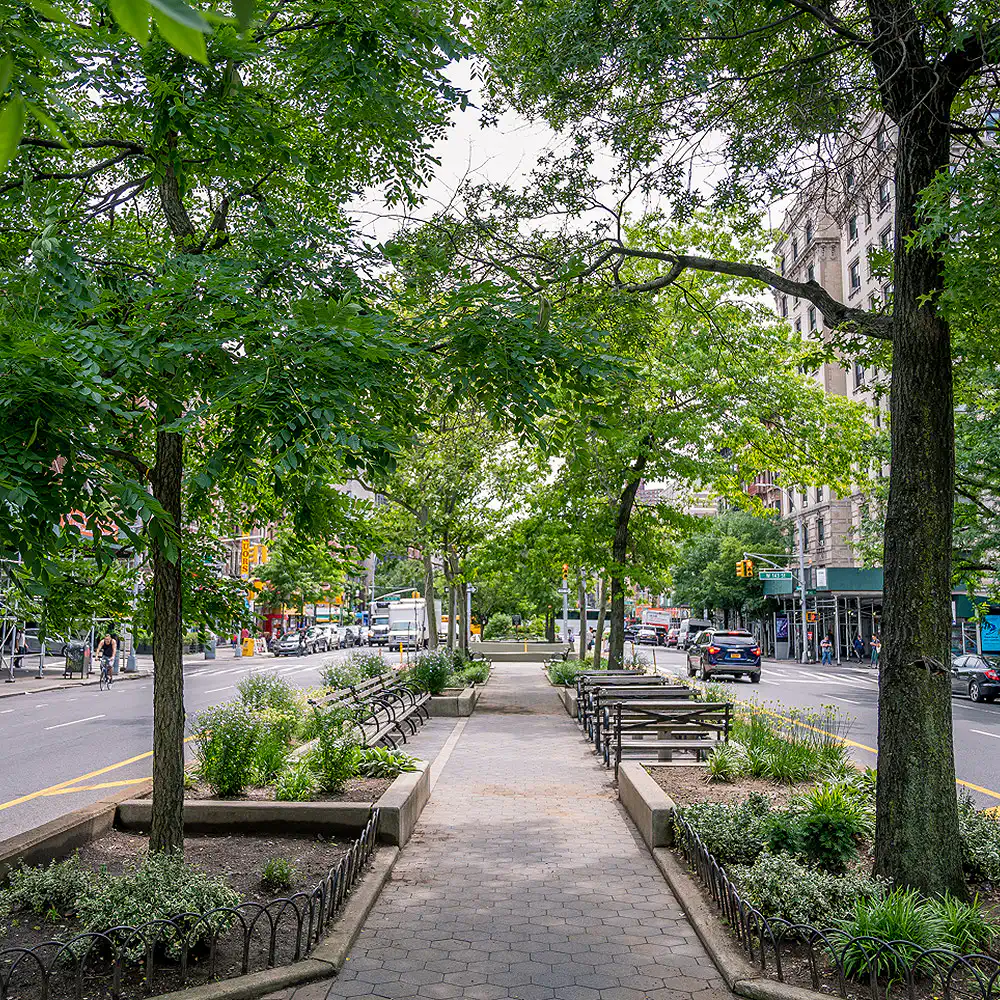
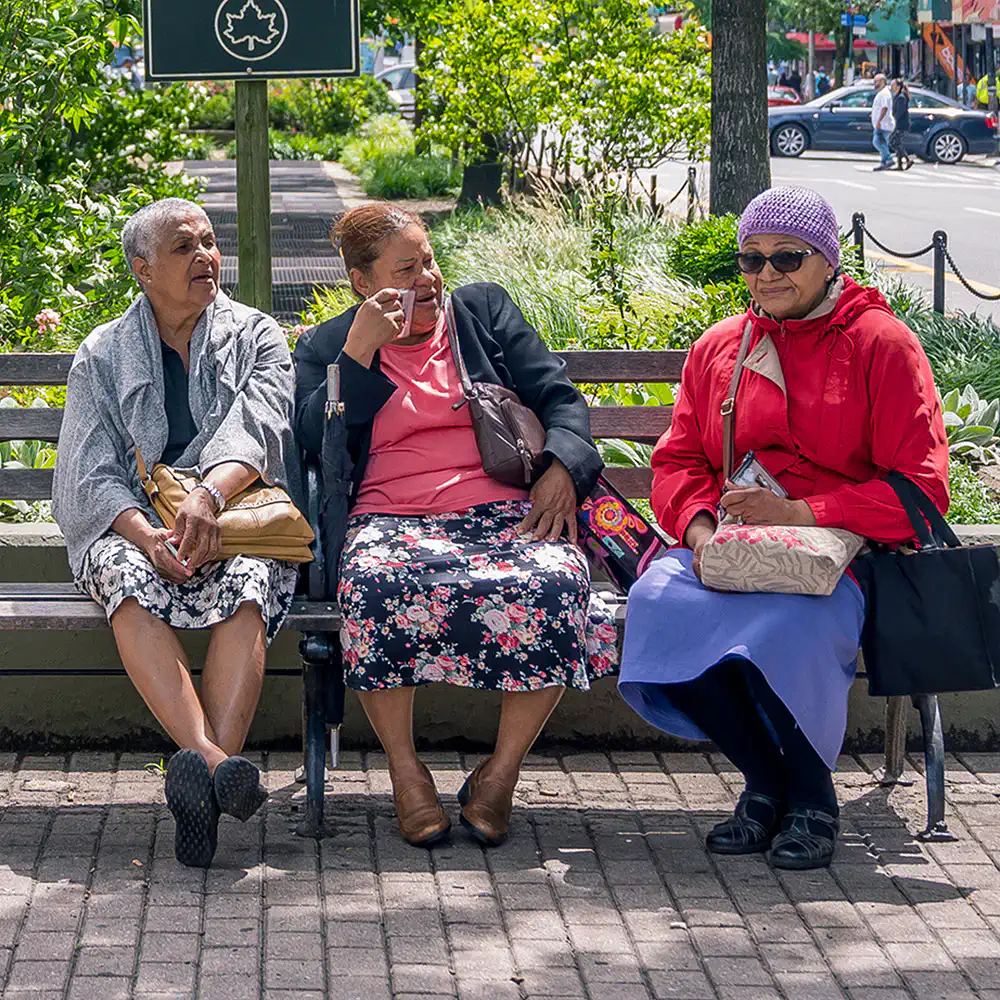
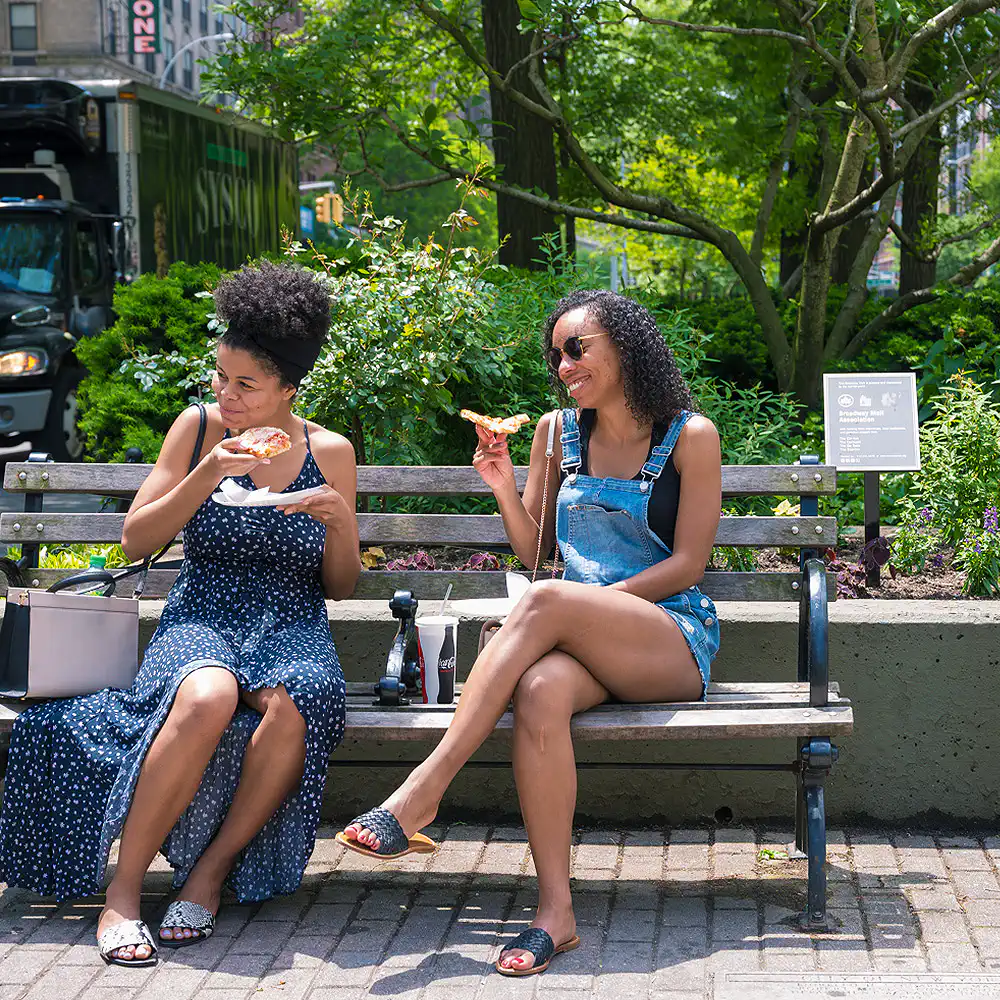
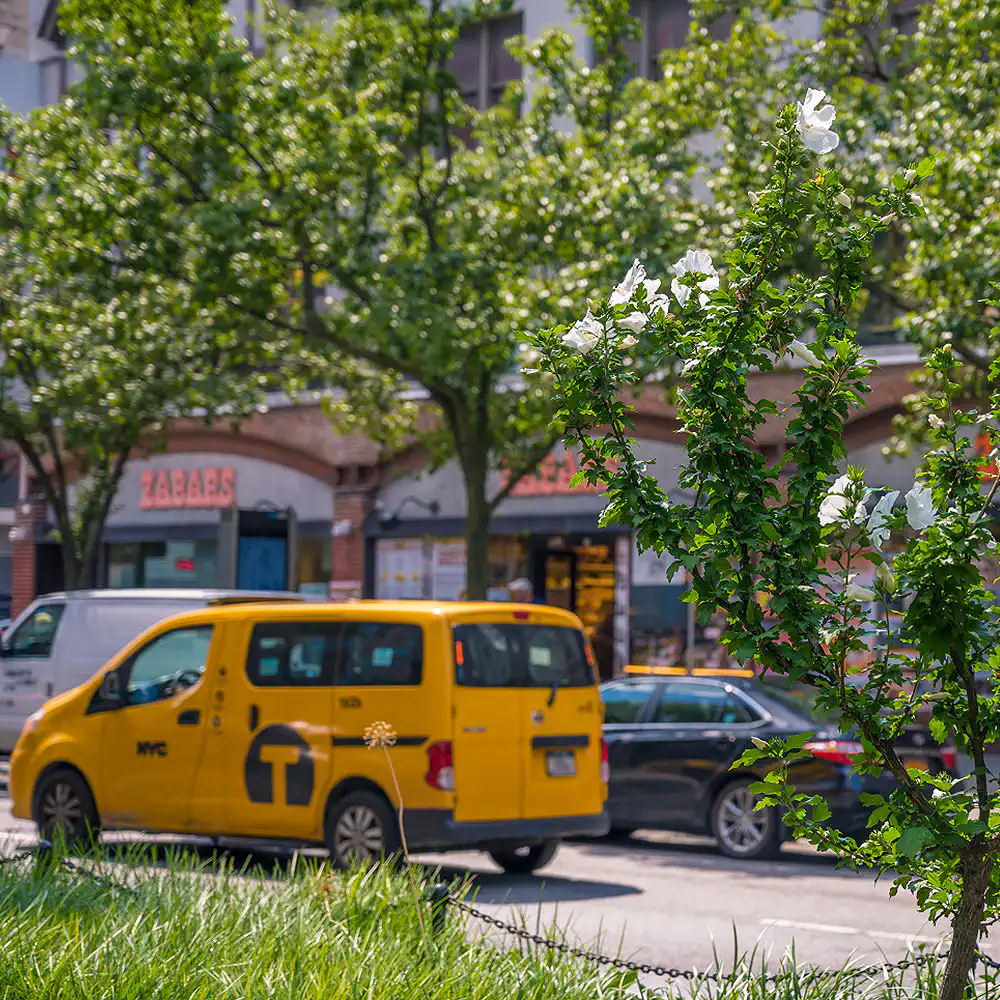
Like an emerald necklace, the Broadway malls stretch from “The Heights” to the edge of Midtown encompassing several distinct Manhattan neighborhoods that feature major institutions, landmark buildings and cultural attractions. Traversing each of the neighborhoods, the malls provide a verdant space amid the bustle of Broadway for all – residents, and visitors alike – to enjoy.  

  • Washington Heights

    Perched at one of Manhattan’s highest points, Washington Heights (155th to 168th Streets) contains dramatic, terraced streets with sweeping views of the Hudson River and the Palisades visible from Broadway, as well as world-renowned cultural institutions and medical institutions. 

    View Washington Heights
  • Hamilton Heights

    Hamilton Heights (from 145th to 155th streets) is a vibrant, historic neighborhood known for its well-preserved brownstones, cultural legacy, and tree-lined streets – and is home to BMA’s uptown office at the Church of the Intercession! 

    View Hamilton Heights
  • West Harlem

    West Harlem begins with a dramatic above-ground #1 subway trestle at 125th street, and runs through to 145th Street, and is known for its cultural landmarks such as the Apollo Theatre, and community-driven green spaces.

    View West Harlem
  • Morningside Heights

    Morningside Heights spans 110th to 122nd Streets. Morningside Park on the east and Riverside Park on the west, along with the open spaces and Neo-classical architecture of Columbia University’s campus, create a pastoral feel to the neighborhood.

    View Morningside Heights
  • Upper West Side

    The Upper West Side (70th to 110th streets) is one of New York City’s largest historic districts, home to landmark buildings, world-class cultural institutions and the leafy canopy of Riverside Park, Central Park, and the Broadway malls.

    View West Side
  • What's happening along the malls?

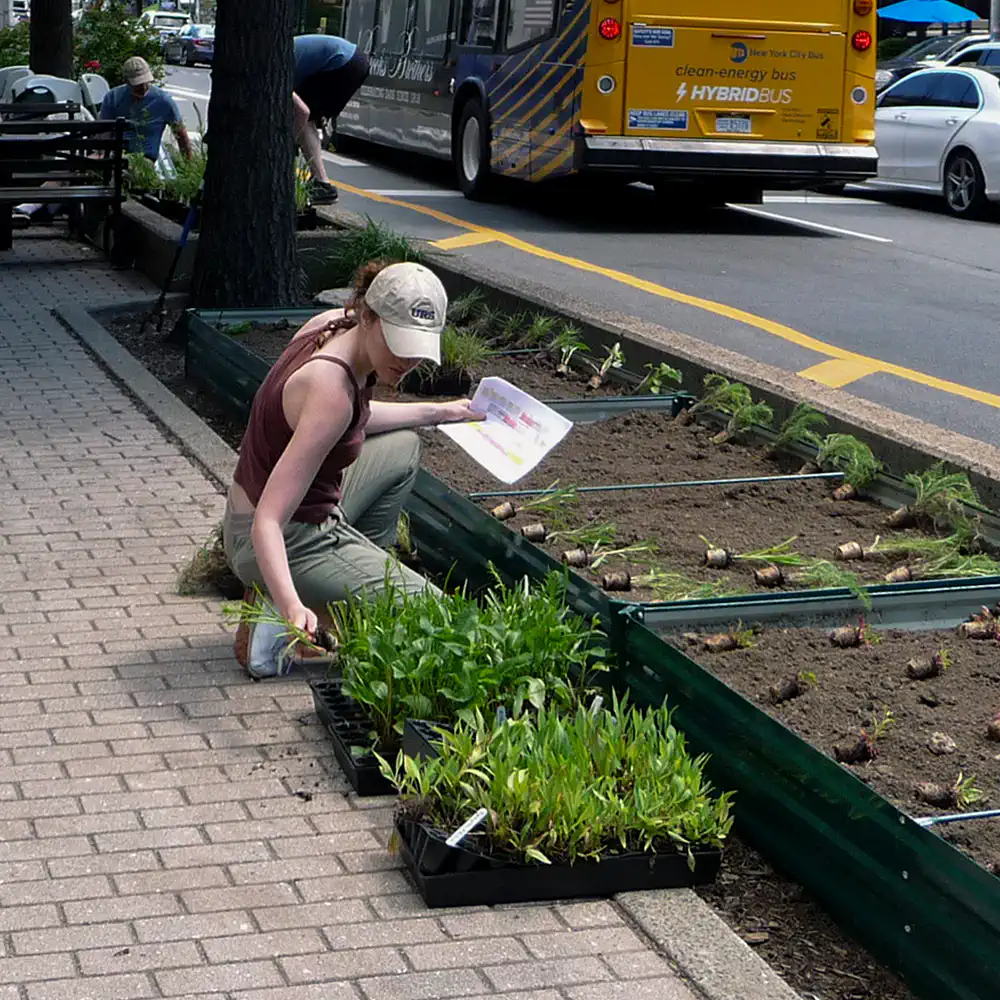
    From community plantings to public art installations, there's always something going on across the neighborhoods. Come see what BMA has in store.

    View Upcoming Events

View plants by neighborhood

Browse the interactive map below to explore the foliage within our malls. Zoom in on the numbered sections to identify the specific species planted in each mall. Note: keep zooming in until you see the icons for the plants! To search for a particular plant or species, type its botanical name into the search box on the left.

Click to interact with map

Washington Heights

Washington Heights sits at the northern end of Manhattan at the island’s highest natural point. That elevated landscape still defines the neighborhood today, with steep, terraced streets and sweeping views of the Hudson River and the Palisades.

On the neighborhood’s west, Fort Tryon Park and The Met Cloisters form one of Manhattan’s most dramatic park landscapes, combining formal gardens with expansive views and historic architecture. Just to the north, Inwood Hill Park preserves the island’s last natural forest, offering a rare glimpse of Manhattan’s original terrain.

The malls extend this greenery through the neighborhood. The 164th Street mall was one of BMA’s “pilot malls” for The Great Green Way, which allowed us to test which plants would thrive in a bustling Manhattan environment.

Native plants in the malls include the juniper tree (Juniperus communis), and a multi-colored mix of false sunflower (Heliopsis helianthoides), Phlox subulata ‘Emerald Blue’, tickseed (Coreopsis verticillata).

Hamilton Heights

Hamilton Heights takes its name from Alexander Hamilton’s country estate.

The neighborhood’s landscape is anchored by St. Nicholas Park, while Riverbank State Park – the only state park in Manhattan – offers expansive green space and waterfront views along the Hudson. Smaller spaces like Convent Garden, Bradhurst Garden, and the Broadway malls, provide pockets of greenery, flowers, and spaces for people to gather.

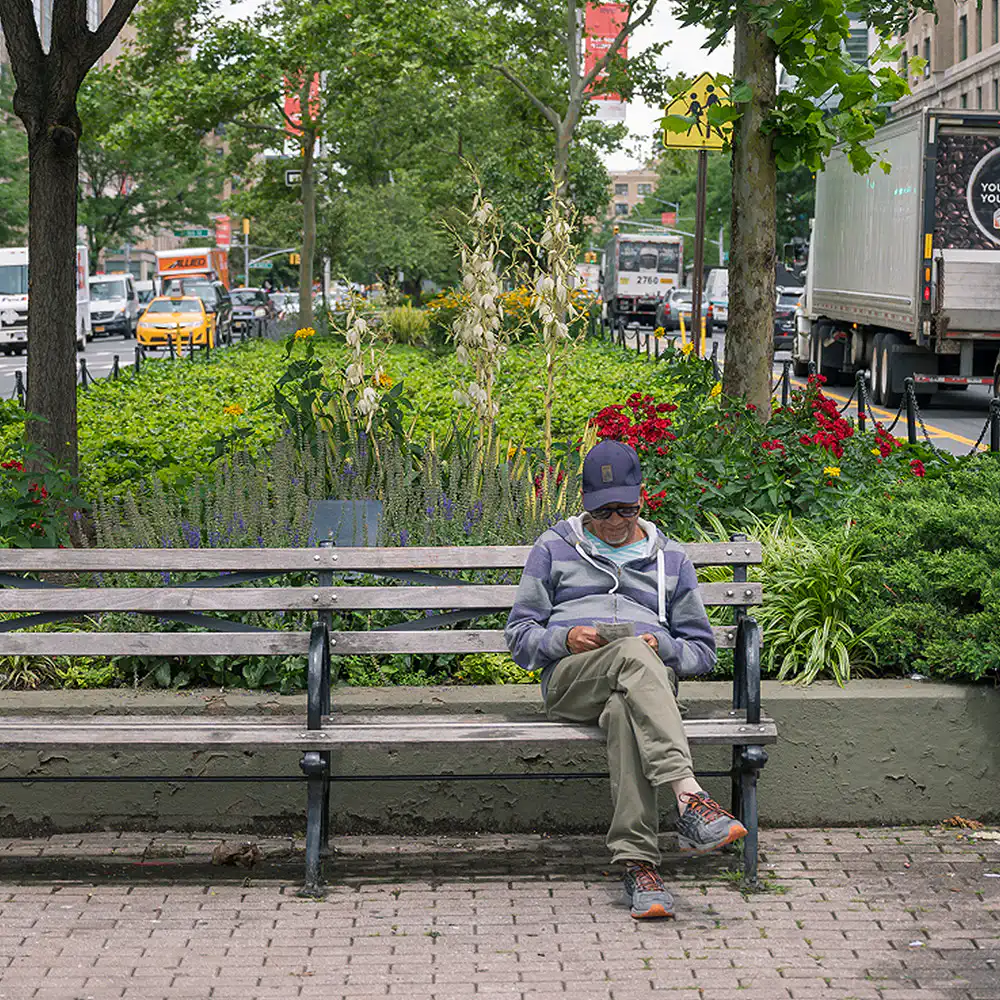
Many of the malls in Hamilton Heights are paved, unlike most of the malls, which are fully covered by plants. In Hamilton Heights, pedestrians can walk up and down the malls, sit at a bench, or even enjoy a game of chess. The 150th Street mall, a paved mall, is BMA’s first pollinator garden, planted to attract bees, birds, and butterflies.

The malls in Hamilton Heights feature vibrant goldenrods (Solidago caesia), asters (Symphyotrichum cordifolium), blueberry bushes (Vaccinium corymbosum) and beach plum trees (Prunus maritima).

Morningside Heights

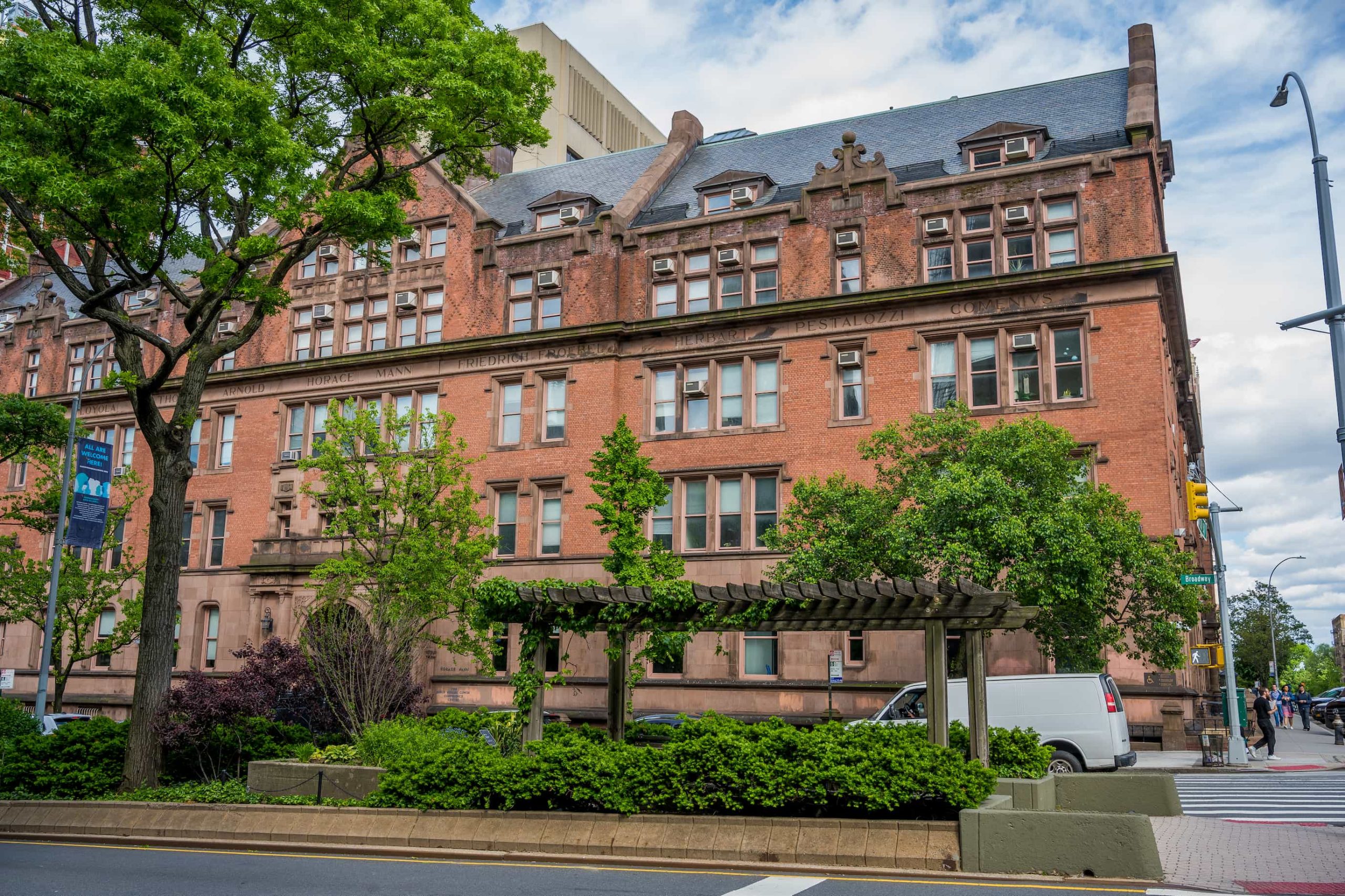
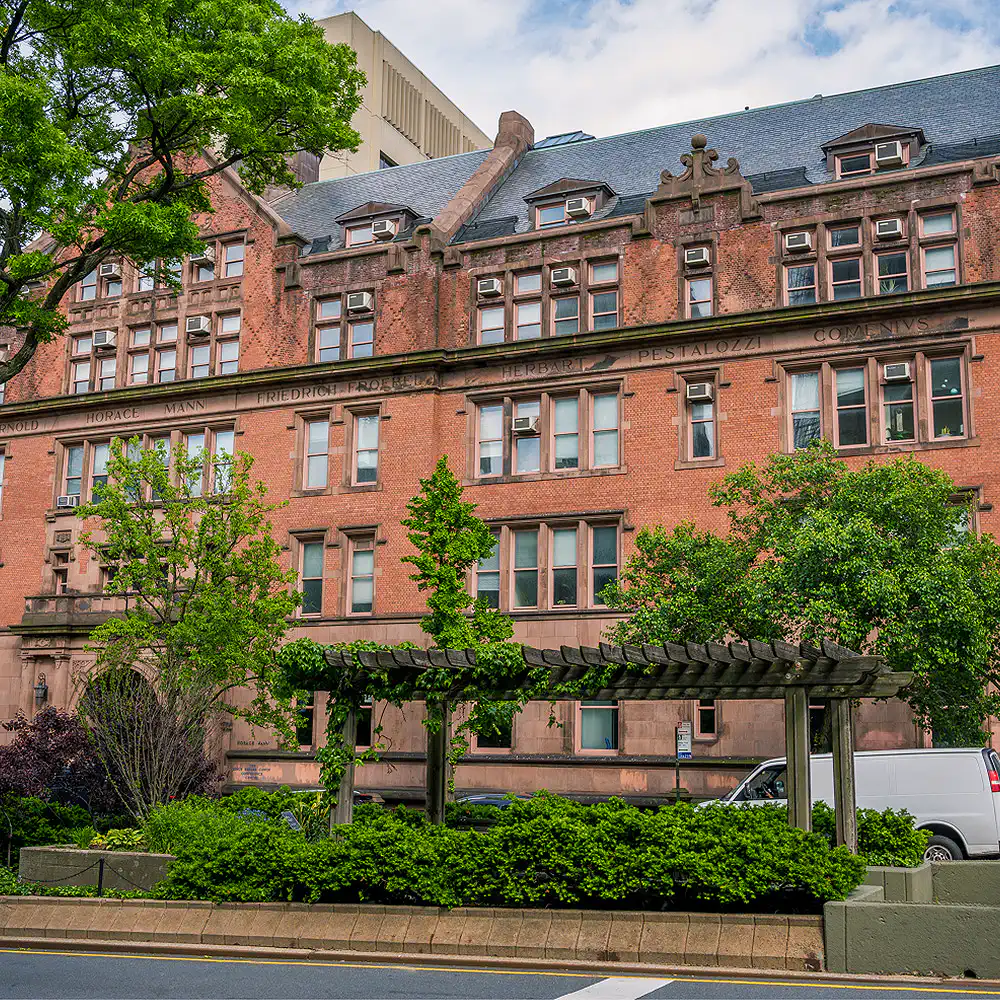
Morningside Heights is home to a concentration of academic institutions, including Columbia University, Barnard College, and the Manhattan School of Music. Woven through this landscape are tree-lined streets, campus quads, and the Broadway malls.

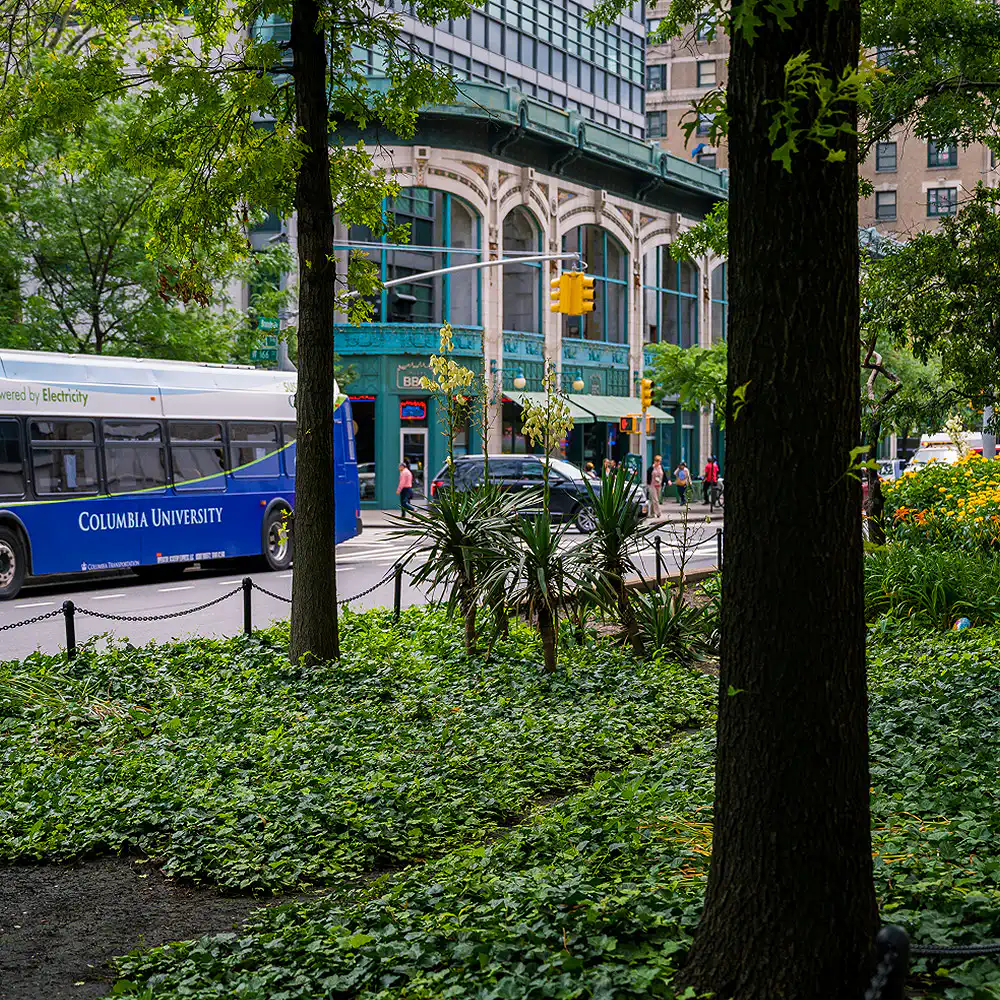
Morningside Park to the east and Riverside Park to the west, along with Broadway’s planted malls create a layered landscape of lawns, trees, and gardens that soften the density of the city and offer places to gather, study, and relax.

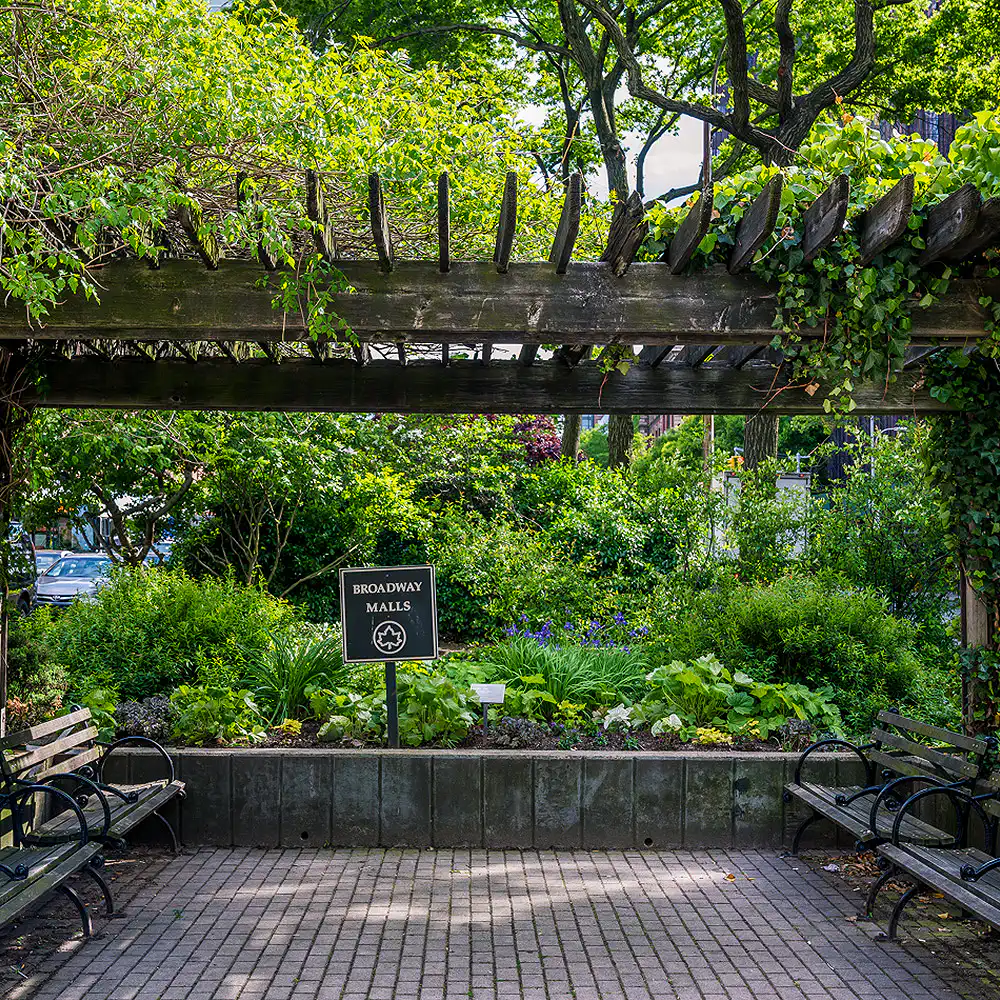
The unique streetscapes in this area are further enhanced by the serene pergolas on the malls at 120th and 122nd streets. These pergolas, originally planted in honor of Ruth Shereff, will be fully restored in 2026 with the generous support of Rochelle Shereff.

On the ground, the foliage in the Broadway malls consists of fragrant trumpet honeysuckle (Lonicera sempervirens), and a species of true lily (Lilium superbum) native to the eastern and central regions of North America.

West Harlem

West Harlem marks the only gap in the 83 Broadway malls. The dramatic span of the above-ground #1 subway across the Manhattan Valley temporarily interrupts the Broadway malls until 135th Street.

Recognized as one of “America’s Ten Greatest Streets” by the American Planning Association, 125th Street is the gateway to West Harlem, and landmarks such as the Apollo Theatre, the Studio Museum in Harlem, and The Schomburg Center for Research in Black Culture.

Parks like Montefiore Square, Jackie Robinson Park, and the Broadway malls are green lungs in the neighborhood, alongside a robust community-driven urban agricultural effort. For example, Harlem Grown has transformed vacant lots into over 14 thriving, volunteer-supported farms and greenhouses, growing produce like kale and chard for the community.

BMA is restoring the 136th Street mall as part of The Great Green Way. The mall will be planted with Golden Alexander, Northern Blazing Star, Mountain Mint, and more native plants.

Upper West Side

The Upper West Side is one of New York City’s largest neighborhoods by population, home to over 225,000 people. The neighborhood is home to major cultural institutions, including the American Museum of Natural History and the New-York Historical Society, the city’s first museum.

It boasts one of Manhattan’s most expansive tree canopies, according to a 2023 study by The Nature Conservancy. While Riverside Park and Central Park are large green spaces, the Broadway malls add a verdant ribbon within the cityscape.

The 83rd Street mall was another “pilot” mall for The Great Green Way, planted with bluestem goldenrods, wild columbine, wild geranium, and more native plants. The malls on the Upper West Side contain ancient trees like the London plane, as well as recently planted native trees like sweetbay magnolia (Magnolia virginiana), and colorful native plants such as varieties of coral bells (Heuchera americana).